


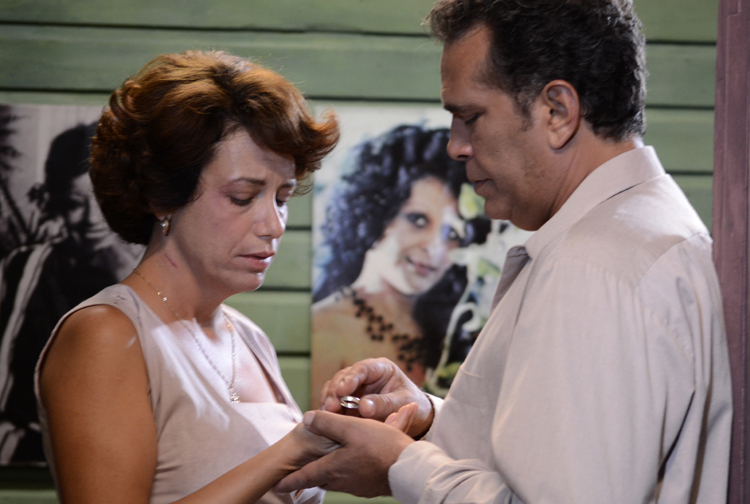
Soy Cuba: Vestido de Novia
Cuba 2014, R: Marilyn Solaya, mit Laura de la Uz, Luis Alberto García, Jorge Perugorría, Isabel Santos, 104 Min, OmeU
+ 2 € für Solar
DE
Im Havanna der 90er Jahre sind die beiden Protagonisten - er Bauleiter und sie Krankenschwester - glücklich ineinander verliebt. Doch eine Begebenheit aus der Vergangenheit holt sie ein und stellt ihre Gefühle füreinander wie auch ihre Werte und Prinzipien auf die Probe. Der erste Spielfilm von Marilyn Solaya war einer der erfolgreichsten Filme des Internationalen Festivals des Neuen Lateinamerikanischen Films 2014 in Havanna und gewann dort den Publikumspreis.
Beide Protagonisten werden zum Opfer der Vorurteile ihrer Umgebung. Er hält dem gesellschaftlichen Druck nicht lange stand und kann nicht länger mit einer Partnerin zusammenleben, die früher ein Mann war. Sie macht wiederum die Erfahrung, sich zwar aus dem falschen Körper befreit zu haben, aber nicht aus dem „sozialen Körper“, in dem der Machismo immer noch lebt.
Der Film basiert auf einer wahren Geschichte, beginnt unspektakulär und gewinnt langsam, aber sicher an Intensität und Spannung. Vestido de novia steht in der Nachfolge des international erfolgreichsten kubanischen Films Erdbeer und Schokolade von T.G. Alea, in welchem die Regisseurin von Vestido...eine Rolle hatte. Wie seinerzeit Erdbeer... geht auch Solayas Film über sein Hauptthema weit hinaus und erzählt von der Gesellschaft als solcher, von Toleranz und Intoleranz, von Macht und Ohnmacht, was seine Publikumswirksamkeit ausmacht.
EN
In 90’s Havana, a nurse and a home builder hopelessly in love, live happily married. A circumstancial fact of her past life, will put their feelings to test and undermine the most elemental principles. Marilyn Solaya’s debut feature film was one of the most successful films at the 2014 International Festival of New Latin American Cinema in Havana, where it won the Audience Award.
Both protagonists fall victim to the prejudices of those around them. He is unable to withstand the social pressure for long and can no longer live with a partner who used to be a man. She, in turn, finds that although she has freed herself from the wrong body, she has not freed herself from the ‘social body’, in which machismo still thrives.
The film is based on a true story; it begins unspectacularly but slowly yet surely builds in intensity and suspense. *Vestido de novia* follows in the footsteps of the most internationally successful Cuban film, *Strawberry and Chocolate* by T.G. Alea, in which the director of *Vestido...* had a role. Like *Strawberry and Chocolate* in its day, Solaya’s film also goes far beyond its central theme to explore society as such, tolerance and intolerance, power and powerlessness – which is precisely what makes it so appealing to audiences.
ES
En La Habana de los noventa, una enfermera y un constructor perdidamente enamorados, viven felizmente casados. Un hecho circunstancial del pasado de ella pondra a prueba los sentimientos, y en tela de juicio también los valores y principios mas elementales. Este primer largometraje de ficción de la realizadora fue uno de los sucesos de público en el Festival Internacional del Nuevo Cine Latinoamericano en La Habana dónde ganó el Premio de Popularidad.
Vestido de novia no solo muestra conflictos individuales, sino también sociales. Ambos protagonistas se convierten en víctimas de los prejuicios. Para él es demasiada la presión de que convive con alguien que antes ha sido varón. Según la directora la protagonista descubre que luego de liberarse de haber nacido en un cuerpo equivocado no ha podido liberarse de un cuerpo social en el que sobrevive el machismo. Vestido de novia tiene la famosa obra Fresa y chocolate de T.G. Alea como punto de referencia. La acogida por parte del público parece similar. Vestido de novia „destaca por los aciertos al aproximarse a una arista del tema de la diversidad sexual con gran aliento humanista basándose en la estructuración de una historia que comienza con gran suavidad y paso a paso, escenas tras escena, va ganando intensidad“ (Soledad Cruz en „Cine Cubano, La Pupila Insomne“).
Trailer: