


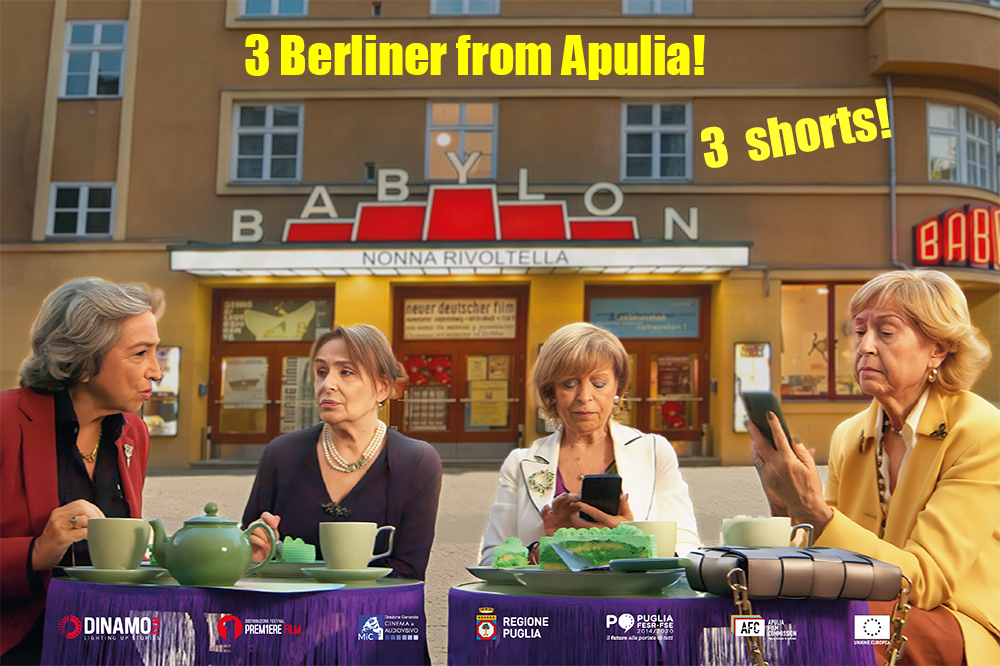
CINEMAPERITIVO vom 24. Mai: Berliner aus Apulien/Berliner from Apulia [Berlinesi dalla Puglia] [OmeU]
Three different Films from 3 directors from our beloved Puglia living in Berlin:
special Guests the directors: Filippo Maria Cariglia, Mario Bucci and Dario Jurilli
Im Anschluss Aperitivo und Gespräch Q&A mit den drei Regisseuren! Host Matteo Forni
Special entry price: 9€ for Everybody! (incl. Aperitivo)
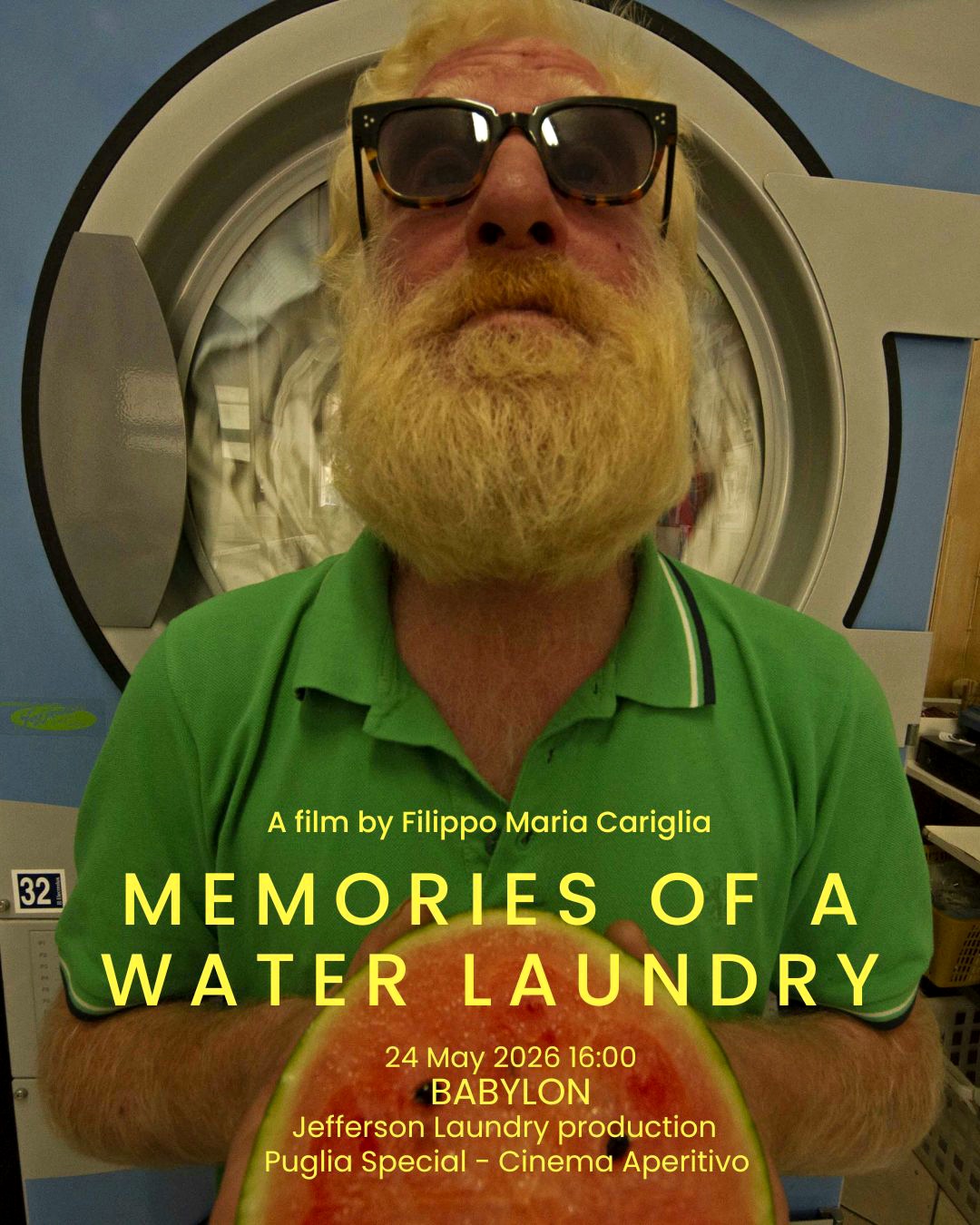 MEMORIE DI UNA LAVANDERIA AD ACQUA [OmeU] IT, 2023 R: Filippo Maria Cariglia, 25 Min.
[GER]
Nach fast zwanzig Jahren hat die historische Münzwäscherei im Stadtteil San Pio in Lecce ihre Pforten geschlossen. Vor ihr ereilte andere Geschäfte dasselbe Schicksal. Es ist das Phänomen der Gentrifizierung: Manche Orte, sogar die unvorstellbarsten Straßen und Gebäude, verändern ihr Gesicht, ohne dass es dafür eine schlüssige Erklärung gibt. Der Waschsalon ist ein Ort, der Begegnungen prägt und gleichzeitig von ihnen geprägt wird; er ist ein Kaleidoskop von Charakteren, darunter „echte“ Freunde, einfache Stammgäste, Paare, die sich ewige Liebe schwören, und „Heilige“, die nicht das sind, was sie zu sein scheinen – alle kommen aus allen Teilen der Welt und gehören jeder sozialen Schicht an. So gleicht die Wäscherei in manchen Momenten einem Hafen, in anderen ist sie ein Zufluchtsort. Ein Ort, von dem aus man in die Welt hinausfliegen kann, oder ein Ort, an dem man sich versteckt, um seine Wunden zu lecken, ein Ausgangspunkt für neue Vorsätze, zwischen einer Wäsche und einem akrobatischen Bügeln, alles im zyklischen Rhythmus der Waschmaschinen.
[ENG]
After almost twenty years in business, the historic coin-operated laundrette in the San Pio district of Lecce has closed its doors. Before it, other local businesses had met the same fate. This is the phenomenon of gentrification: certain places – even the most unlikely streets and buildings – end up changing beyond recognition, with no clear explanation as to why. The laundrette is a place that shapes and is shaped by the people who pass through it; it is a kaleidoscope of characters, from close-knit friends to casual customers, couples swearing eternal love, and ‘saints’ who are not what they seem, all hailing from every corner of the world and every walk of life. Thus, at times the laundrette resembles a harbour, at others a refuge. A place from which to take flight or a place to hide and lick one’s wounds, a starting point for new resolutions, between a wash and an acrobatic ironing session, all to the cyclical rhythm of the washing machines.
[ITA]
Dopo quasi vent'anni di attività, la storica lavanderia a gettoni nel quartiere San Pio di Lecce ha chiuso i battenti. Prima di essa, lo stesso destino era toccato ad altre attività commerciali. È il fenomeno della gentrificazione: alcuni luoghi, persino le strade e gli edifici più impensabili, finiscono per cambiare fisionomia senza una valida spiegazione del perché. La lavanderia è un luogo che plasma e allo stesso tempo viene plasmato dagli incontri, è un caleidoscopio di caratteri, tra amici “di spessore”, semplici avventori, coppie che si giurano amore eterno e “santi” che non sono quello che sembrano, tutti provenienti da ogni parte del mondo e appartenenti a ogni ceto sociale. Così la lavanderia in alcuni momenti somiglia a un porto, in altri è un rifugio. Un luogo da cui spiccare il volo o un posto dove nascondersi per leccare le proprie ferite, un punto di partenza per nuovi propositi, tra un lavaggio e una stiratura acrobatica, il tutto nel ritmo ciclico delle macchine lavatrici.
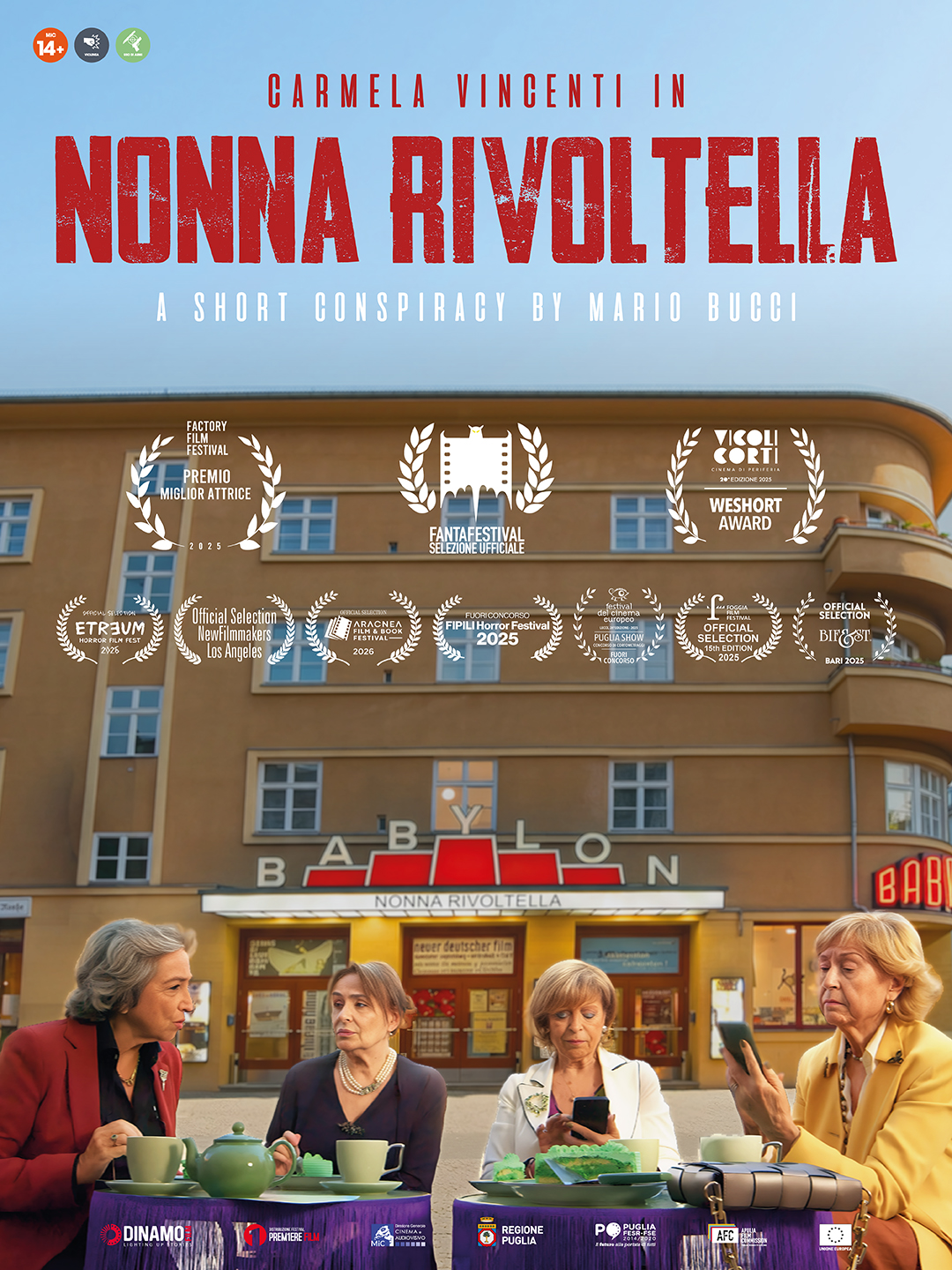 NONNA RIVOLTELLA [OmeU] IT, 2024 R: Mario Bucci, with Carmela Vincenti, 18 Min.
[GER]
Carmela, eine ältere Witwe, die ständig in den sozialen Medien unterwegs ist, wird von ihren eigenartigen Sonntagsfreundinnen in die Welt der Verschwörungstheorien eingeführt. Fake News und Desinformation, die vor allem vom Blogger Oblivion verbreitet werden, verwandeln sie so in eine skrupellose Killerin, die sich der dümmsten Intoleranz verschrieben hat. Der Kurzfilm beleuchtet die Macht der Desinformation und die erschreckenden Folgen, wenn man alles glaubt, was man liest.
Internationale Premiere bei NewFilmakers Los Angeles; WeShort-Preis beim XX. Festival Vicoli Corti; im Wettbewerb beim 45. FantaFest in Rom; Sonderveranstaltung beim FiLiPi 2026; Preis für das beste Drehbuch und die beste Darstellerin beim IV. Factory Film Fest; Bester Kurzfilm beim V. Aracnea Film & Book Festival.
mit Unterstüzung von
Apulia Film Fund der Stiftung Apulia Film Commission und der Region Apulien, finanziert aus Mitteln des Regionalen Operationellen Programms Apulien (POR Puglia) EFRE-ESF 2014/2020 und des Kulturministeriums.
[ENG]
Carmela, an elderly widow who is constantly on social media, is introduced to the world of conspiracy theories by her rather peculiar Sunday friends. Fake news and misinformation, spread mainly by the blogger Oblivion, thus transform her into a ruthless killer devoted to the most blinkered intolerance. The short film explores the power of misinformation and the terrifying consequences of believing everything one reads.
International Premiere at NewFilmakers Los Angeles; WeShort Award at the 20th Vicoli Corti Festival; in competition at the 45th FantaFest in Rome; Special Event at FiLiPi 2026; Best Screenplay and Best Actress Awards at the 4th Factory Film Fest; Best Short Film at the 5th Aracnea Film & Book Festival.
with the support of
the Apulia Film Fund of the Apulia Film Commission Foundation and the Apulia Region, funded by the Apulia Regional Operational Programme (POR) ERDF-ESF 2014–2020 and the Ministry of Culture.
[ITA]
Carmela, un'anziana vedova sempre connessa sui social media, viene introdotta al mondo delle teorie del complotto dai suoi amici della domenica, personaggi piuttosto eccentrici. Le fake news e la disinformazione, diffuse principlamente dal blogger Oblivion, la trasformano così in una spietata assassina dedita alla più cieca intolleranza. Il corto esplora il potere della disinformazione e le terrificanti conseguenze del credere a tutto ciò che si legge.
Anteprima Internazionale al NewFilmakers Los Angeles; Premio WeShort al XX Festival Vicoli Corti; in concorso al 45° FantaFest di Roma; Evento Speciale al FiLiPi 2026; Premio Miglior Soggetto e Miglior Attrice al IV Factory Film Fest; Miglior Corto al V Aracnea Film & Book Festival.
con il contributo di
Apulia Film Fund della Fondazione Apulia Film Commission e Regione Puglia a valere su risosrse del POR Puglia FESR-FSE 2014/2020 e del Ministero della Cultura.
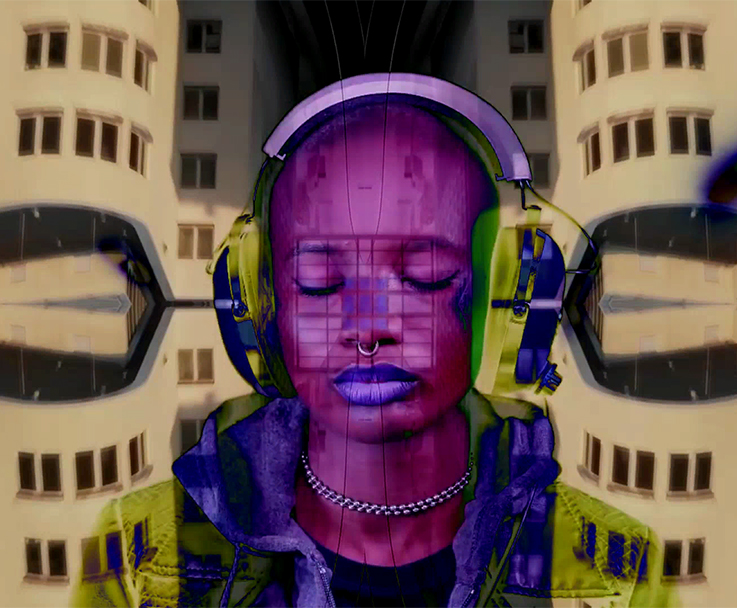 SINFONIE [OmeU] IT, 2026 R: Dario Jurilli, 25 Min.
[GER]
„Sinfonie“ ist ein filmisches Experiment, das darauf abzielt, einen urbanen Raum neu zu gestalten, in dem sich interdisziplinäre Begegnungen gegenseitig inspirieren, um Unterschiede zu erforschen, die Begegnung zwischen verschiedenen Medien zu fördern und zu einer neuen Vision des urbanen Raums zu führen. Ein Projekt, das sich ständig wandelt, offen ist und sich immer wieder neuen Elementen öffnet. Ein work in progress Dokumentarfilm.
Der Name „Sinfonie“ verdeutlicht den Wunsch, sich von der Tradition inspirieren zu lassen, die uns gelehrt hat, die Bedeutung der Stadt neu zu definieren: die „urbanen Symphonien“ aus den 1920er Jahren. Ihre Schöpfer waren überzeugt, dass die Kamera etwas offenbaren kann, das sich dem gewöhnlichen Blick entzieht, dass sie den Rhythmus des Lebens beschreiben, das Unsichtbare finden und zu einer Wahrheit führen kann. Durch die Dynamik der Natur und indem sie das menschliche Leben als Rhythmus betrachteten, schufen sie ein Mosaik, eine Symphonie, die auf Tausenden von Energien in voller Bewegung basiert.
„Das ist der Puls der Stadt. So ist eine Metropole“, sagte Walter Ruttmann.
In Anlehnung an den wissenschaftlichen Ansatz des Mediums Film, der dieses Zeitalter geprägt hatte, und durch verschiedene ästhetische Strömungen zielt diese Sinfonie, die mit Ton, bildender Kunst und Tanz arbeitet, darauf ab, eine neue Vision einer Stadt zu präsentieren, die aus vielfältigen Assoziationsketten zwischen Sprachen und Bedeutungen sowie Rhythmus in Bild, Körper und musikalischer Struktur entsteht.
[ENG]
Sinfonie is a cinematic experiment, designed to re-build an urban space where multidisciplinary encounters inspire one another, to explore differences, promote encounters between different media, and lead to a new vision of the urban space. A constantly evolving project, open and continually embracing new elements. A documentary in progress.
The name Sinfonie explains the desire to be inspired by the tradition that taught us to redefine the meaning of the city: the “urban symphonies” from the 20'.Their authors were convinced that the camera can reveal something that escapes the common vision, able to describe the rhythm of life, find the invisible and lead to some truth. Through the dynamism of nature and considering human life as rhythm, they gave birth to a mosaic, a symphony based on thousands of energies in full motion.
“This is the pulse of the city. This is what a metropolis is like.” Walter Ruttmann said.
Attempting the scientific approach to the medium film that had animated that age and through different aesthetic lines, this Sinfonie, working with Sound, Visual Art and Dance, aims to present a new vision of a city made by multiple chains of association between languages and meanings and rhythm in picture, body and musical structure.
[ITA]
Sinfonie è un esperimento cinematografico ideato per ricostruire uno spazio urbano in cui gli incontri multidisciplinari si ispirano a vicenda, per esplorare le differenze, favorire le interazioni tra diversi mezzi di comunicazione e portare a una nuova visione dello spazio urbano. Un progetto in continuo mutamento, aperto e che continua ad aprirsi verso nuovi elementi. Un documentario work in progress.
Il nome Sinfonie riflette il desiderio di trarre ispirazione dalla tradizione che ci ha insegnato a ridefinire il significato della città: le «sinfonie urbane» degli anni Venti. I loro creatori erano convinti che la macchina da presa potesse rivelare ciò che sfugge allo sguardo ordinario, capace di catturare il ritmo della vita, svelare l’invisibile e condurre a una qualche verità. Attraverso il dinamismo della natura e considerando la vita umana come un ritmo, hanno creato un mosaico: una sinfonia composta da migliaia di energie in pieno movimento.
«Questo è il battito della città. È così che si presenta una metropoli», affermò Walter Ruttmann.
Cercando un approccio scientifico al mezzo cinematografico che aveva animato quell’epoca e attraverso diverse linee estetiche, questa Sinfonie, che lavora con il suono, l’arte visiva e la danza, mira a presentare una nuova visione di una città costituita da molteplici catene di associazioni tra linguaggi, significati e ritmo nell’immagine, nel corpo e nella struttura musicale.
Filippo Maria Cariglia is a director, photographer, producer and entrepreneur from Salento. For almost 20 years, his name has been associated with Jefferson Lavanderia, a source of inspiration for many of his artistic projects and a cultural hub in the city of Lecce, which he owns together with his brother Andrea. He studied analogue photography and screenwriting in Rome. He has worked on various low-budget film sets, and in 2010 he co-wrote and co-directed the film "L’Altra Città", an independent production that tells the story of a group of immigrants taking part in an anti-racism tournament in a former psychiatric hospital. He takes an interest in the gentrification of the San Pio district in Lecce and becomes involved in running his own laundrette, which serves as the inspiration for his debut book "Memorie di una lavanderia ad acqua".
As a director, writer and cinematographer, Mario Bucci combines social themes with visual aesthetics in television projects such as “Chi se ne frega della musica”, presented by the rapper Capparezza, and “Non cresce l'erba”, which was broadcast on MTV Italia, as well as in multi-award-winning documentaries such as “Una meravigliosa stagione fallimentare”. He has collaborated with various international directors (including Justin Benson and Aaron Moorhead on the film “Spring”), co-wrote the film “Da che parte stai” with Pierluigi Ferrandini and Francesco Lopez – a film about the lives of residents in a working-class neighbourhood forced to leave their homes due to gentrification – and served as cinematographer on works such as “Tony Driver” and the documentaries “I Mastri”, “In perpetuo” and “Giro di banda”. He is based between Bari and Berlin and, following the short film “Nonna Rivoltella” in 2026, directed by Daniele Luchetti, has realised the as yet unreleased work “Luna Verde”.
Born in Puglia in 1983, Dario Jurilli is a filmmaker and musician. He graduated in Literature and Film Studies from the University of Rome and in Film Directing from the Centro Sperimentale di Cinematografia (CSC-Rome). His work draws on narrative and non-narrative forms of representation, focusing on the intersection between cinema, dance and painting, whilst incorporating music, new media and digital culture. Through this synthesis of diverse techniques, he has developed a unique cinematic language, creating immersive media art experiences. His works have been presented at festivals, group and solo exhibitions worldwide.