


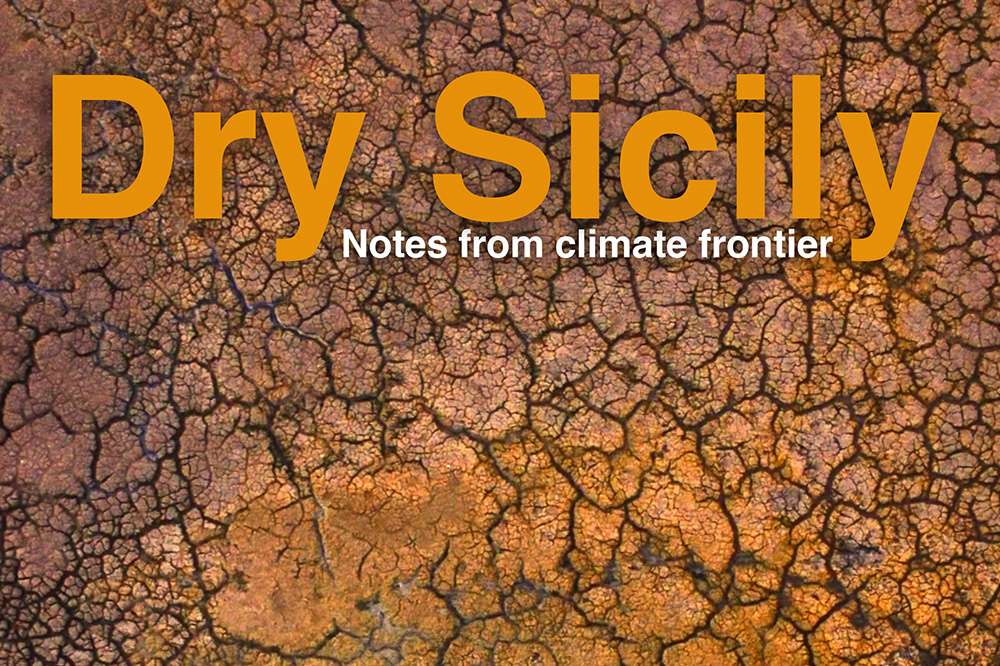
CinemAperitivo: Dry Sicily-Appunti dalla frontiera climatica [Dry Sicily - Notes from climate frontier] [OmeU]
I 2025, R: Nunzio Gringeri und Mauro Mondello 52 Min
bei der Einführung wird historisches Filmmaterial vom Instituto Luce gezeigt (insg. 20 Min)
Im Anschluss Aperitivo und Gespräch mit den Regisseuren Nunzio Gringeri und Mauro Mondello
La Sicilia si prosciuga, lentamente e silenziosamente.
Dry Sicily racconta una crisi idrica che non è solo meteorologica, ma sistemica: un viaggio tra paesaggi svuota:, voci del territorio e responsabilità profonde, nel cuore di un Mediterraneo sempre più arido. Sicily is drying up slowly and silently.
Dry Sicily tells the story of a water crisis that is not just meteorological, but systemic: a journey through emptied landscapes, local voices and structural responsibilities, in the heart of an increasingly arid Mediterranean.
SHORT SYNOPSIS
Sicily is drying up — slowly and silently. Dry Sicily tells the story of a water crisis that is not just meteorological, but systemic: a journey through emptied landscapes, local voices and structural responsibilities, in the heart of an increasingly arid Mediterranean.
LONG SYNOPSIS
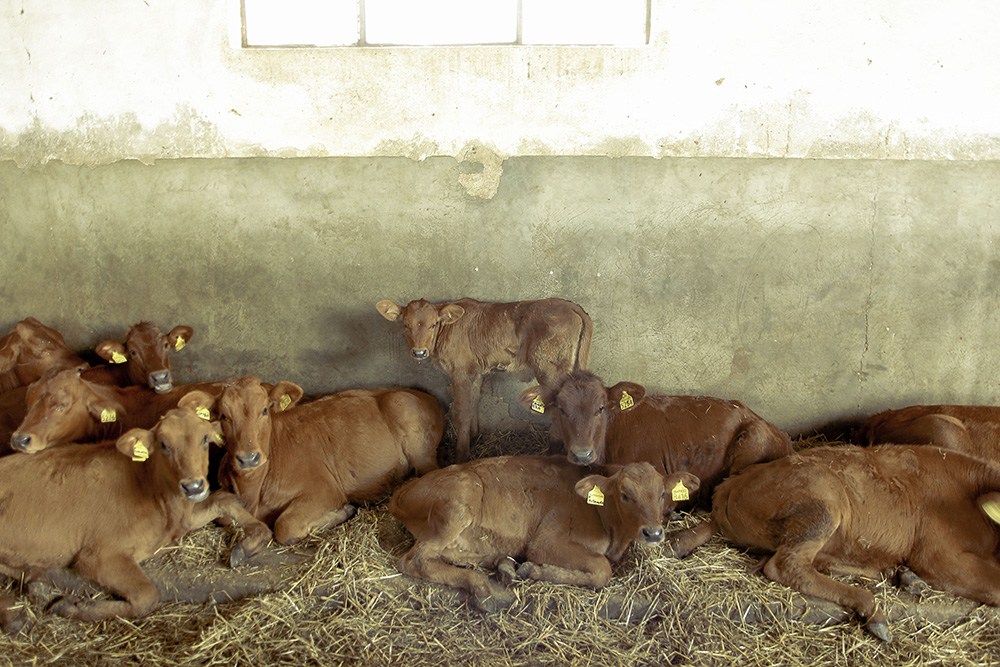
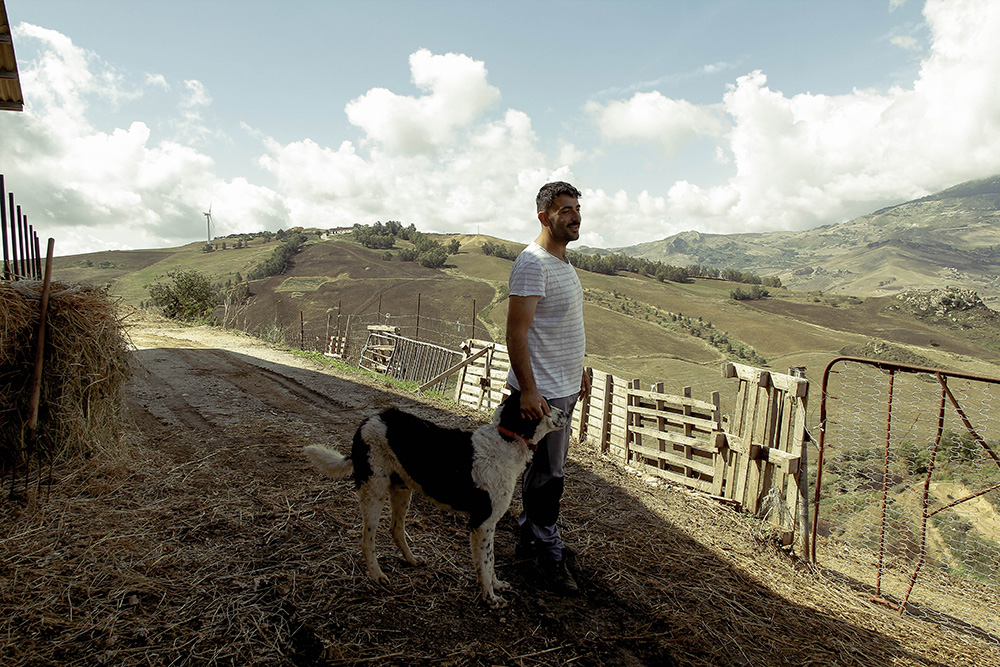
In Sicily, water disappears without a sound. Lakes retreat, dams crack, fields split open. But this is not just a local emergency — it’s the visible face of a Mediterranean that is drying out. What unfolds in Sicily today, with dramatic clarity, mirrors what is happening in many parts of the Global South, where climate change collides with fragile infrastructures, political inertia, and outdated development models. Dry Sicily tells this story by travelling across the island’s main reservoirs, weaving together the natural geography of the territory with the voices of those who face water scarcity every day: farmers, entrepreneurs, regional officials, families, technicians, activists. The images show drained basins, scorched land, silences heavy with tension. But the film goes further: it questions the island’s water history and probes long-standing responsibilities. Drought is not new. It is the outcome of layered structural causes. It’s not just a matter of missing rainfall, but of rising temperatures, accelerated evaporation, and disrupted seasons. Added to this are poor political choices, neglected infrastructures, and an aging water system that loses over 50% of the water before it reaches homes and fields. No single voice explains everything — but all of them, together, open up the question. The film is built through fragments that fit together: testimonies, details, absences. The camera doesn’t invade — it observes. It lingers on gestures, gaps, the lines left by receding shorelines. The landscape becomes a character, and silence a language. The images don’t just illustrate — they evoke, telling the slow story of a collective crisis. Sicily has historically learned to live with water scarcity. But today it stands at the centre of a deep transformation. The desert is advancing, rainfall has decreased by over 40% since 2003, and in 2021 the island recorded Europe’s highest temperature: 48.8°C. According to Italy’s National Association of Agricultural Water Boards, potable water reservoirs were at just 10% of capacity in March 2024. Since September 2023, Sicily has lost over 315 million cubic meters of water — a 64% drop. A crisis without precedent in recent history. Dry Sicily is a film about thirst — physical, material, systemic — but also about waiting, transformation, and vulnerability. A documentary that speaks about Sicily, but reaches the entire Mediterranean. And all of us.
DIRECTOR’S STATEMENT
Dry Sicily was born out of urgency. The urgency to tell a story that in Sicily is visible to the naked eye, but too often remains out of focus in public discourse. Together with Nunzio Gringeri, we travelled the island from west to east, visiting some of its most important reservoirs. At every stop, we encountered faces, collected stories, and witnessed landscapes in transformation. From the beginning, our approach was one of listening. We didn’t want to build a didactic or argumentative film, but to create space for reality. We moved between the poles of civil narrative and contemplative gaze. The images are there to give shape to what words often fail to express: the distance between a full dam and an empty one, the muddy line left behind when the water vanishes, the slow time between two rainless seasons. We were inspired by two different, but deeply related, ways of making cinema: one that explores reality through close observation, and another that gives voice to those often left on the margins, blending testimony and political insight. Dry Sicily moves between these two paths, searching for its own form — rooted in the present, yet open to complexity. What we portray is not just a climate problem. It is also about infrastructure, memory, failed political choices, and abandonment. It’s a story about Sicily, of course — but also about the Mediterranean. And perhaps, about much more beyond that.
THE DIRECTORS
Nunzio Gringeri
Nunzio Gringeri graduated from the Centro Sperimentale di Cinematografia in Palermo, where he made two documentaries as director: “What do I have to do to make you love me?”, the story of the Italian-American actor Charlie Abbadessa, and “I come to Isgrò”, where he tells the Sicilian conceptual artist and his Technique of erasure in everyday Reality. He is also involved as D.O.P. on documentary films and short films such as: “Officium” by Giuseppe Carleo, “La compagna solitudine” by Davide Vigore, “Fiori di Fuoco” by Riccardo Cannella and “La traiettoria ideale” by Giovanni Totaro. For Totaro also signs the photograph of “Happy winter”, in Official Selection Out of Competition in Venice 74. In 2021 he shoots with Vittorio Moroni a docu-series, entitled “Denise”, distributed by HBO – Discovery.
Mauro Mondello
Mauro Mondello is a freelance journalist and documentary filmmaker. His work mainly focuses on geopolitics, conflicts, human rights, and migration, with a particular interest in Eastern Europe, Russia, the Caucasus, and the Arab world. He often works in the field as a reporter. His reportages have been published, among others, in The Guardian, El País, Die Zeit, La Repubblica, Newlines Magazine, and Expresso. Editor-in-chief of the in-depth magazine Yanez, he was selected in 2020 for the Maurice Greenberg World Fellows Program at Yale University. He curated the book Le Siciliane and directs the feminist creative hub Settentrionale Sicula. Together with Nunzio Gringeri, he directed Stateless and Malta Calling, both part of a multi-award- winning trilogy on migration that also includes Lampedusa in Berlin. From May to September 2025, he walked almost 4,000 kilometers, from Portugal to Sicily, to support two social impact projects currently being developed on the island. You can follow the story of this journey on social media under the project 3740km.